What is a Virtual Laboratory?
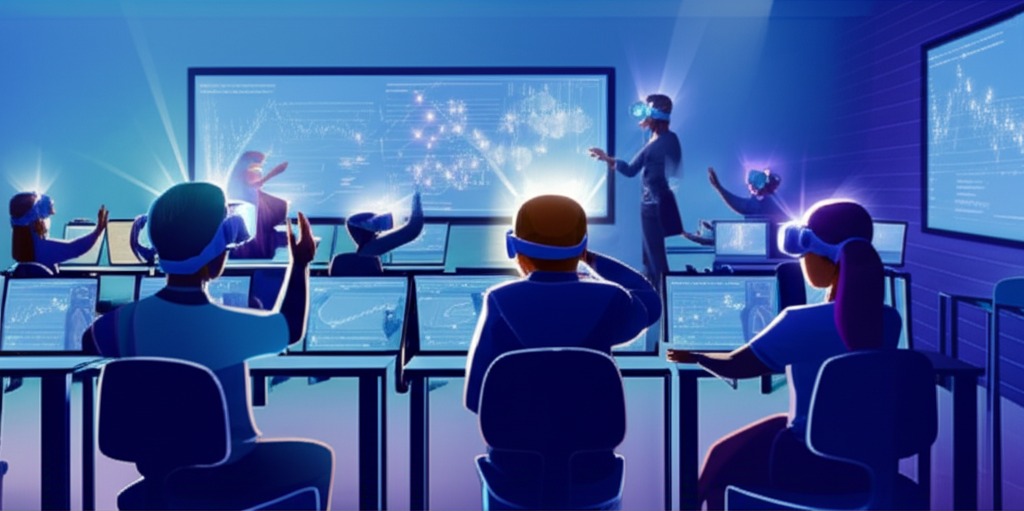
In today’s world, the integration of technology into education is leading to profound changes in learning methods. One of these changes is the emergence of virtual laboratories. Virtual laboratories allow students to simulate the experiences offered by a real laboratory environment in a digital setting, providing a safe and accessible learning opportunity.
Virtual Reality and Education
Virtual reality (VR) technology has become an increasingly popular tool in the field of education. Through VR, students can better understand abstract concepts, safely experience complex processes, and enhance their learning motivation. Research has shown that VR-based learning improves students’ academic achievement, critical thinking skills, and problem-solving abilities.
Freina and Ott’s (2015) study emphasizes that VR has great potential to increase student engagement and motivation, while also enabling dangerous or challenging experiments to be carried out safely.
The Importance and Advantages of Virtual Laboratories
Virtual laboratories make it possible to conduct experiments that cannot be performed or are risky in a traditional lab setting, in a safe manner. These applications help students develop experimental skills, understand scientific methods, and apply theoretical knowledge in practice.
Onyesolu (2009) points out that virtual laboratories offer an ideal solution to issues such as lack of equipment and high setup costs. Especially in science education, virtual laboratories are said to provide significant advantages in terms of both accessibility and cost.
Furthermore, VR-based virtual laboratories save considerable time by eliminating the need for physical preparation and setup processes. Since students can start experiments immediately, the learning process accelerates and class time can be used more efficiently.
Examples from Academic Studies
There is a substantial body of literature examining the impact of virtual laboratory applications in education:
VR Lab Project (Fang et al., 2021): Developed during the pandemic as an alternative to laboratory experiments that normally had to be conducted face-to-face, this project demonstrates how VR technology can make laboratory experiences more accessible in remote education.
Onyesolu (2009): Emphasizes that VR laboratories are an important solution for reducing equipment shortages and setup costs in engineering and science education.
Georgiou et al. (2007): Introduced a VR-based learning environment for chemistry lessons, but due to limitations of the technology used, no strong findings emerged to guide the project further.
Freina and Ott (2015): Concluded that immersive VR increases student motivation and provides a safe learning environment.
Hernández-de-Menéndez et al. (2019): Examined the contribution of virtual laboratories to education and noted that a hybrid use (combining real and virtual laboratories) was recommended.
Conclusion
Virtual laboratories are powerful tools that offer both pedagogical and practical advantages in education. Their ability to provide safe, cost-effective, and repeatable experiments makes them indispensable, particularly in science education. Research indicates that the contributions of VR technology in this area will continue to grow in the future.
References
Freina, L., & Ott, M. (2015, April). A literature review on immersive virtual reality in education: state of the art and perspectives. In The international scientific conference elearning and software for education (Vol. 1, No. 133, pp. 10-1007).
Onyesolu, M. O. (2009, October). Virtual reality laboratories: An ideal solution to the problems facing laboratory setup and management. In Proceedings of the World Congress on Engineering and Computer Science (Vol. 1).
Fang, H., Xiru, Y., Kun, H., Wenxin, L., & Haodong, T. (2021, July). Design and application of VR lab based on unity. In Journal of Physics: Conference Series (Vol. 1982, No. 1, p. 012167). IOP Publishing
Georgiou, J., Dimitropoulos, K., & Manitsaris, A. (2007). A virtual reality laboratory for distance education in chemistry. International Journal of Social Sciences, 2(1), 34-41.
Hernández-de-Menéndez, M., Vallejo Guevara, A., & Morales-Menendez, R. (2019). Virtual reality laboratories: a review of experiences. International Journal on Interactive Design and Manufacturing (IJIDeM), 13, 947-